Start with the problem you’re trying to fix
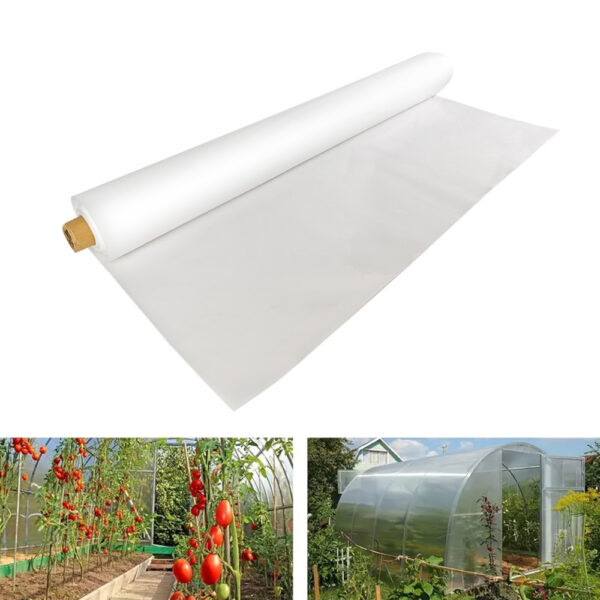
Most growers aren’t picking greenhouse film because they love plastics — they pick it because they’re trying to stop crop loss, shading issues, or heat bills spiralling. If your choice isn’t solving those problems, it’s the wrong buy. Look for purpose-built options like uv resistant greenhouse plastic sheeting that match the specific trouble you’re seeing: premature yellowing, hail tears, too much glare or poor heat retention.
Why this matters — real-world perspective and credibility
Think about large-scale operations in the Netherlands: those growers don’t guess at films — they measure light spectra, longevity and maintenance costs because margins are tight and seasons are planned to the day. I’ve advised commercial operations for over a decade and worked alongside product testing labs, so I’m not just repeating marketing lines. When you’re evaluating suppliers, ask for third‑party tests and field references; real numbers beat glossy brochures every time. For a practical context, many decisions hinge on factors unique to commercial greenhouse farming, so treat specifications as functional requirements, not suggestions.
The problem-driven checklist you can use right now
1) Define the actual problem: list the crop response you need (better diffusion, longer season, less condensation). 2) UV resistance and light transmission: check precise % transmission at PAR wavelengths and confirmed UV stabilisers. 3) Lifetime vs cost: ask for predicted service life under local conditions and calculate cost per square metre per year. 4) Mechanical strength: tear resistance and puncture resistance for local weather (hail/wind). 5) Spectral control: diffusion and infrared properties — does the film suit seedlings or fruiting crops? 6) Anti‑drip/anti‑fog behaviour: reduced dripping protects leaves and lowers disease risk. 7) Warranty and real failure cases: get the terms and actual replacement history. 8) Roll sizes and installation fit: mismatched rolls waste time and money. 9) Supplier reliability and parts availability: how fast can they replace damaged film mid‑season? 10) Environmental and disposal policy: recycling or take‑back plans matter for long‑term costs.
Common mistakes that lead to returns, repairs or quiet regret
Buying the cheapest sheet and assuming it’s the same as higher‑grade film; trusting a single spec number rather than spectrum and mechanical data; choosing thickness alone rather than engineered properties; ignoring installation and ventilation because ‘it’s only film’. Those errors show up as higher crop disease, extra heating or early replacement — not just an extra invoice.
Quick comparisons — viable alternatives and when to use them
Standard polyethylene film: low cost, short life — fine for temporary covers. Coextruded multi‑layer films: better UV stabilisation and anti‑fog, suitable for multi‑year use. Polycarbonate or glass: high upfront cost, long life, good for high‑value crops where light control and durability matter. Match the tech to the business case: short‑term beds and trials don’t need the same spec as year‑round tomato houses.

How to verify claims before you commit
Request technical data sheets and ask for lab reports showing UV ageing, tensile strength and light transmission curves. Get a sample on a small house and monitor for a season — that’s the clearest test. Talk to other growers in similar climates, and confirm the supplier’s installation guidance and emergency response time. Don’t accept vague guarantees; make them show the metrics.
Wrap-up and sensible next step
If you’re solving specific production problems — light quality, disease from condensation, heat retention or simple longevity — treat the purchase as a technical fix, not a commodity buy. Practical checks and on‑farm tests separate good buys from costly mistakes, and a reliable partner that stands by product performance makes the process straightforward. For many growers that means choosing a supplier whose products and service match the checklist above, and that practical fit is what growers typically find when they work with HGDN.