Introduction
Picture a night shift on a busy warehouse floor. The amr controller gets blamed when a pallet misses its dock by three inches. A floor tech tells me his mobile robot controller kept the fleet steady last quarter, yet data shows a 17% bump in micro-stops during peak picks. That gap—between what you feel and what the logs say—happens all the time around here. We see jitter on Wi‑Fi, brownouts from tired power converters, and a sensor fusion stack that burps when lighting changes. If 40% of stoppages trace back to timing drift and comm noise, what does that say about the controller’s core design? (And yeah, the floor fights back.) So here’s the question: are we tuning the wrong knobs, or looking at the wrong layer of the stack? Let’s line up the real issues and show where a smarter controller earns its keep—then compare the paths to get there.
Under the Hood: The Pain Points We Don’t Log
Where do teams actually get stuck?
In Part 1, we mapped common failure modes. Now let’s go a layer deeper and stay technical. Start with the mobile robot controller as the ground truth. When uptime slips, the root isn’t always the obvious one. You’ll see tiny delays in the CAN bus that cascade into the trajectory planner. You’ll see edge computing nodes starved by chatty QoS settings. And you’ll see SLAM lose its nerve when glare kicks in, because the sensor fusion pipeline wasn’t tuned for that texture. These aren’t dramatic faults. They’re paper cuts. Each adds 10–30 ms. Stack ten of them and you have a stall, or worse, a near-miss with the safety PLC stepping in. Funny how a “stable” map can still yield wobbly tracking—because the timing chain, not the math, was the leak.
Look, it’s simpler than you think. Traditional fixes chase symptoms: more retries on the radio, tighter PID loops, extra watchdogs. Those help on blue-sky days. But the moment power converters sag at shift change, the controller’s scheduler misses a beat and the SLAM update lands late. That’s why operators feel “random” slowdowns. It’s not random. It’s nondeterministic execution under load. The hidden pain point is coordination: the controller must orchestrate localization, motion control, and fleet messages with deterministic timing, not just pass each packet along. Until that’s baked in, you’ll keep nursing bottlenecks that never show up in post-run graphs—because the spikes were short and the logs were coarse.
Next-Gen Principles That Shift the Uptime Curve
What’s Next
Here’s the comparative lens—old playbook versus new architecture. The legacy path adds patches: heavier buffers, more retries, bigger batteries. The forward path rethinks the core of the mobile robot controller. Principle one: deterministic scheduling from sensor ingest to actuation, using time-aware networking (think TSN) so SLAM and the trajectory planner land on beat, every cycle. Principle two: modular middleware with bounded execution, so a misbehaving vision node can’t starve localization. Principle three: energy-aware control that reads battery internal resistance and adapts torque commands—meaning fewer brownouts and cleaner stops. Add in OTA pipelines that validate on a digital twin and you trim regression risk before the update hits the floor—funny how that works, right?
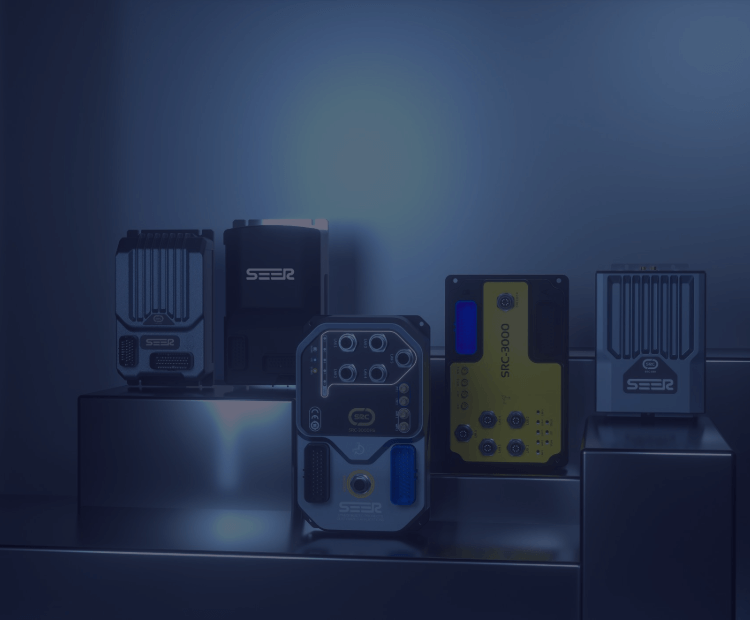
Real-world impact shows up in quiet numbers. Jitter shrinks. Micro-stops drop. Maps stop flapping when lighting shifts because sensor fusion windows adjust in real time, not after the fact. Compared to the bolt-on approach, this design treats timing as a first-class spec, same as max speed or payload. The payoff isn’t just smoother motion; it’s safer crossings when traffic spikes, because control loops don’t slip while the safety layer waits. And yes, it feels wicked steady—Boston stubborn steady. When we step back from Part 2’s pain points, the lesson is clear: uptime depends less on adding redundancy and more on removing contention.
If you’re picking a path forward, use three simple metrics to cut through the buzz. One: end-to-end latency budget under load—measure 95th and 99th percentile, not only the mean. Two: determinism of the compute graph—can the controller prove bounded timing across SLAM, planning, and comms on stressed networks. Three: energy resilience—does motion control stay stable across the battery curve, with diagnostics that catch drift before it bites. Nail these, and the fleet runs clean through shift change, stormy Wi‑Fi, and glossy floors. That’s the real bar for a modern mobile robot controller, and it’s how you turn specs into uptime without heroics. Shared in good faith, from the shop floor to the server room, with a nod to SEER Robotics.